
Good Fortune

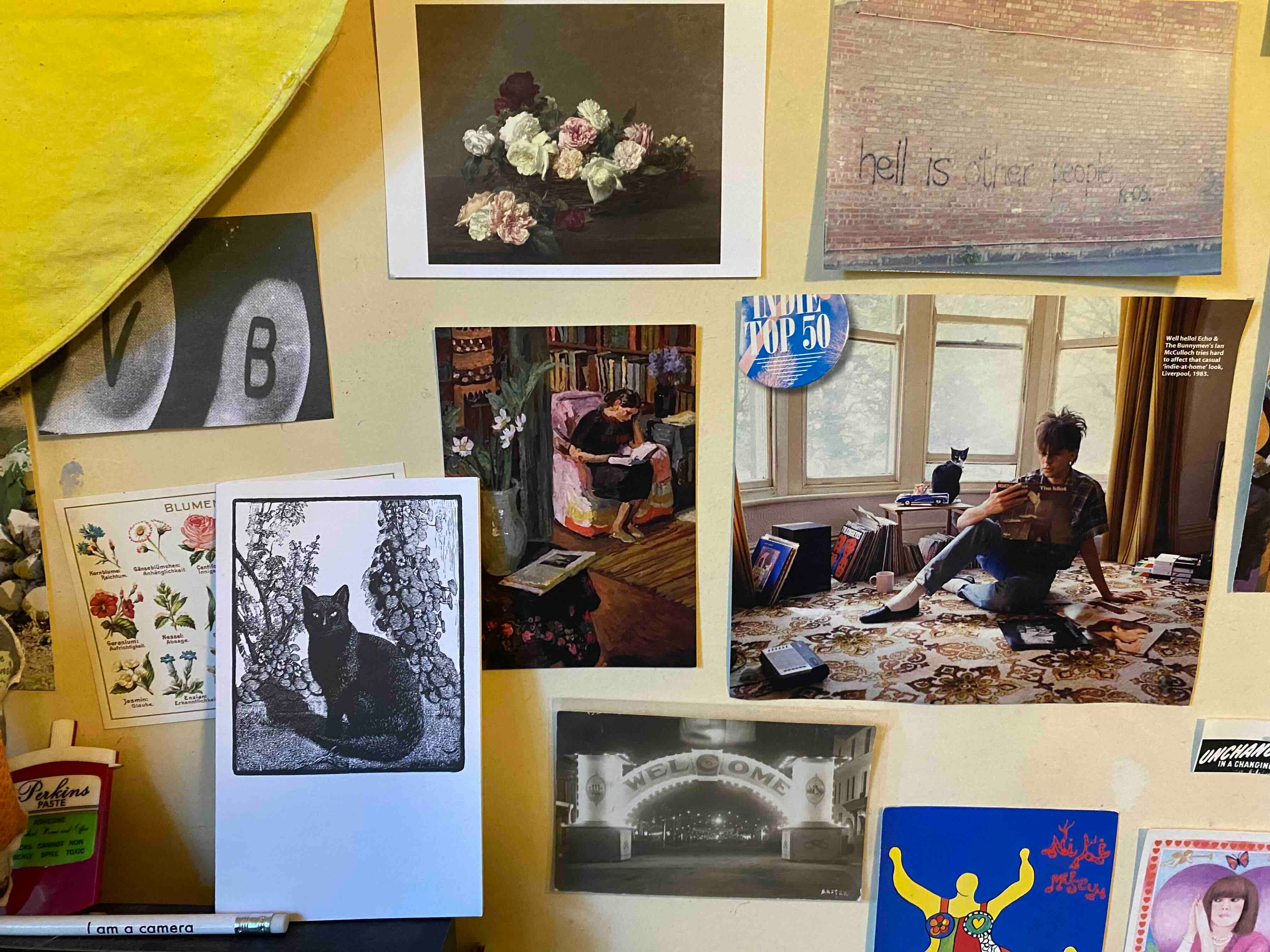
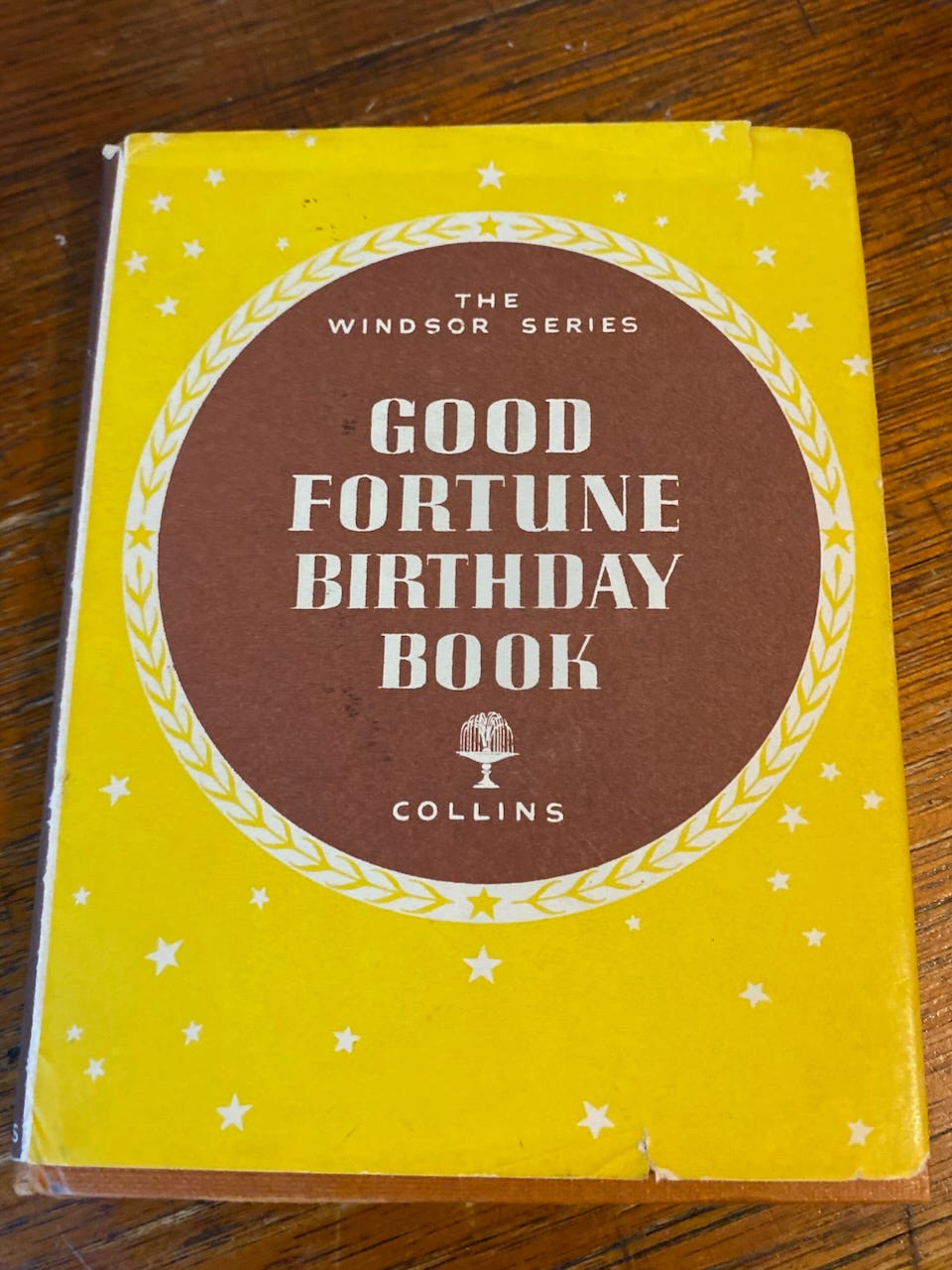
At my desk I keep a number of calendars and cards which I consult to set the day’s mood. In my Good Fortune Birthday Book, it says of a person born today that “this birthday is associated with divided interests”. My cat tarot cards bring up The Hermit - picturing a ginger cat sitting on top of a pile of books (‘the secrets of the feline mind are well hidden’). From my We are all astonishingly wise cards, by the artist Katy B Plummer, I reveal ‘Messages transmitted, received’, which seems to be a good omen for writing this message to you.
The Good Fortune Birthday Book has a mean streak, despite or perhaps because of being compiled from ‘ancient astrological lore’. For example:
This birth date may go with want of staying power. Learn to watch for small signs of headway and you will discover that, like the proverbial earthworm, you keep ‘inching along’ to better things.
This strikes me as a certificate of participation kind of fortune. Mine tells me my birthday ‘favours poesy’, which is close enough to the truth, I guess.
Calendar!
Thank you to all those who have written to me over the summer to tell me you are reading Calendar and enjoying it. It is very interesting that everyone seems to be reading Calendar slightly differently, although there are 5 main ways:
Straight through
Day by day
Day by day starting from Jan 1st 2026
Dipping in/ a page or more at random
One story at night before bed
I love to hear your responses and reading methods!
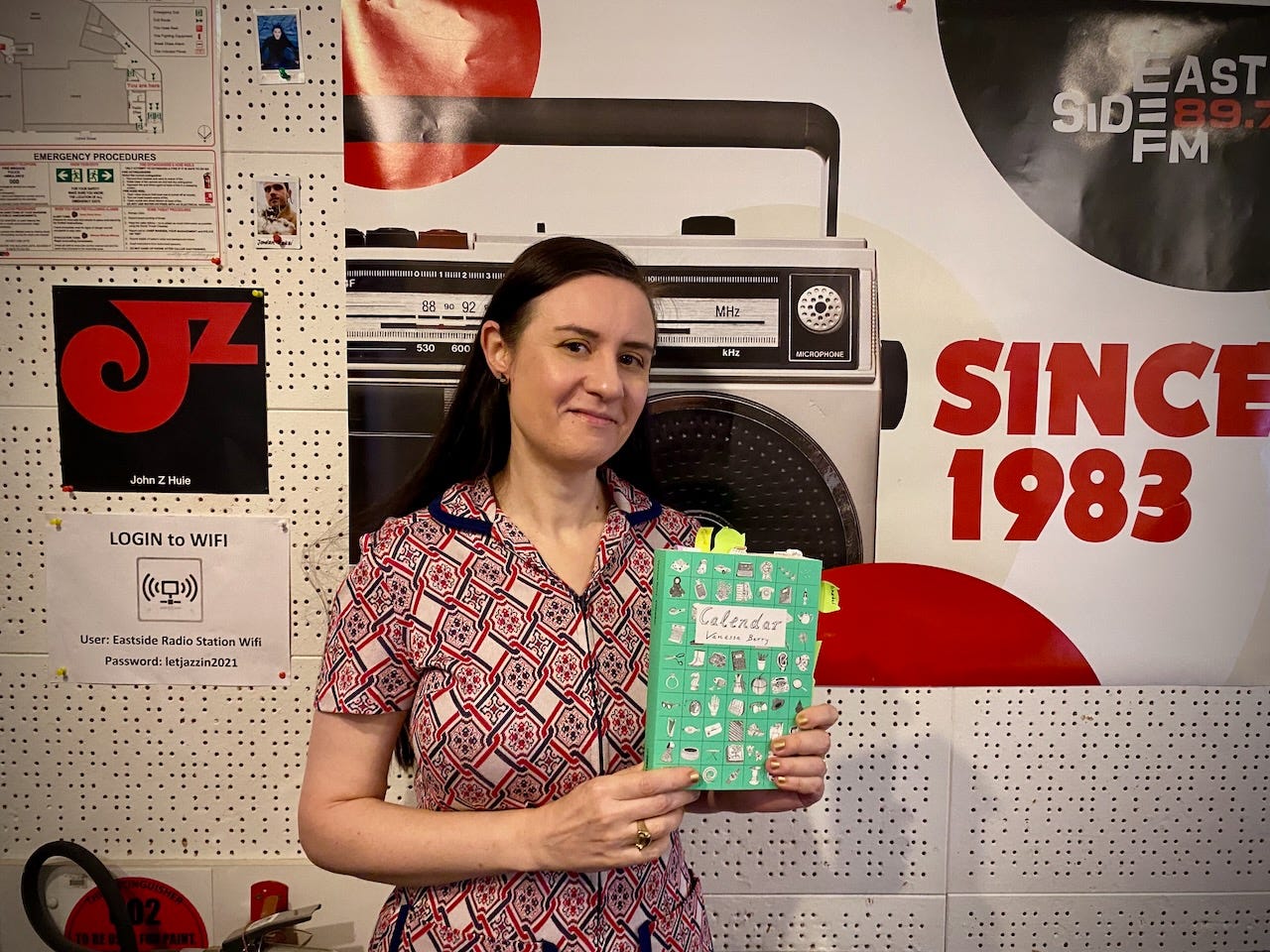
In December I visited Eastside FM for an interview on their Arts Wednesday show: if you’d like to listen to my conversation with presenter (and brilliant author in her own right) Bronwyn Rennex, you can listen here (scroll down to the December 10th show).
Around that same time, the photographer Nash Ferguson took an amazing timeless portrait of me and Teddy!
On Instagram I’ve been doing some occasional readings from Calendar (sometimes also featuring Teddy) if you’d like to listen to me reading and talking about some of my favourite Calendar objects.
What’s coming up?
I’m going to be interviewed on 3RRR’s Literati Glitterati on Wednesday 28th January. The show’s on from 12-1pm and I’ll be talking about and reading from Calendar.
I’ll be in Melbourne for the Festival of the Photocopier soon after: I’ll have a stall on the first day of the two: Saturday 7th February, 12-5pm, at the Meat Market, North Melbourne. I’ll have some copies of Calendar and my calendar stamp so if you’d like a signed copy, or a zine, or to say hello and have a chat, do come by.
For fans of ‘S’, he’s having an exhibition soon, opening February 14th, at Numbers Gallery in Kings Cross.
Object of the Month (in which I expand on some of the objects I write about in Calendar)
Flipbook
The gifs of the 19th century: I love flipbooks and the little worlds they hold. The ‘Premier Danseuse’ is doing something I never in my life have been able to do, that being a cartwheel, the effect enhanced by her fluffy layers of petticoats, which bloom like a fluffy carnation as she turns upside down.
We have quite a few flipbooks and I enjoy how random they are in what they feature: a man being chased by a bull (an advertisement for Bovril), a cartoon cat that comes up to lick the page, Elvis’s face zooming in to show it’s made of barcodes, a cartoon bird on wheels delivering a book, a black cat and a white cat tumbling together, arranging hair in a French twist, a hummingbird hovering, and a worm that tunnels through the pages.
Object Project: the summer reading edition.
Summer is reading season for me, so this time I thought I’d feature a number of the object-related books I have been reading.
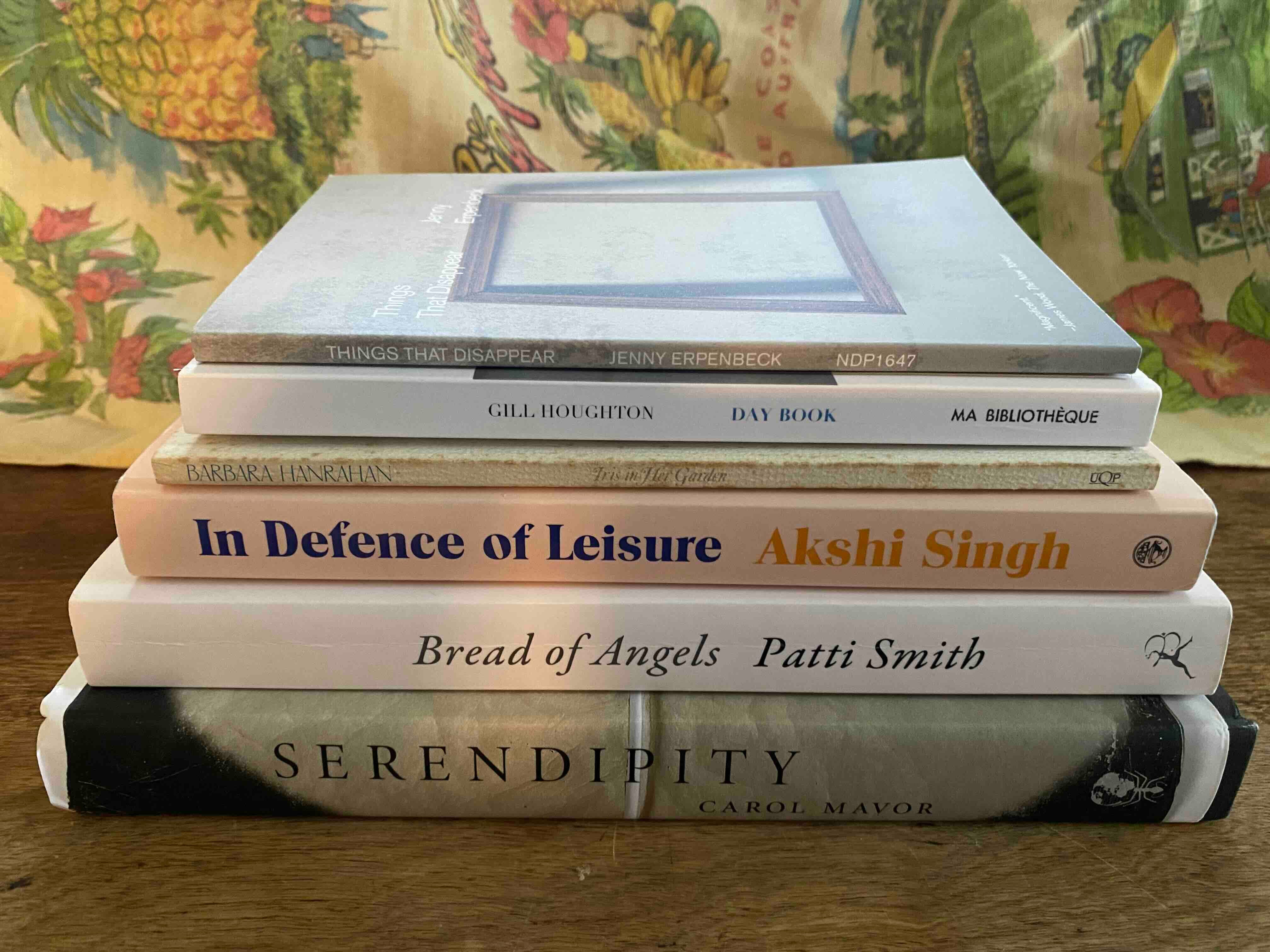
Things That Disappear by Jenny Erpenbeck is a slim book of essays on disappearance, memory, and forgetting. She writes about the disappearance of East Germany, about her family, and about everyday objects. The book itself is small and slight with a tendency to disappear between others, which is an added disappearing aspect. The essays are on things like ‘cheese and socks’, ‘stoves and coal’, ‘empty space’, ‘men’, ‘splitterbrotchen’ (a type of bread that has disappeared apart from at two bakeries in Berlin), but it’s impossible to know from the names of the essays alone the strange but recognisable places they will reach.
Day Book by Gill Houghton is published by Ma Biblioteque, Sharon Kivland’s publishing imprint. The beautiful books they publish are difficult to track down in Australia, so Gill and I traded our books: the day book that is Calendar, for Day Book, a collection of short daily texts, 112 days in all, guided by women artists who have taken the day as their subject. Each day has a short, thoughtful, diaristic meditation on an aspect of time, artistic labour, motherhood, and artists and writers such as Agnes Varda, Chantal Akerman, and Bernadette Mayer.
Iris in Her Garden by Barbara Hanrahan. After reading Barbara Hanrahan’s recently-republished novels Annie Magdelene and Sea Green, I have been in search of more. Iris and Her Garden is a collection of autofictional short stories based on her childhood: Iris is her grandmother. As with all of Hanrahan’s fiction it is grounded in the physical world: eiderdowns, rock cakes, bracelets, a dress-up box, pastel party streamers, a sandcastle, talcum powder: I envisage all of these objects like they are being carved in one of Hanrahan’s prints. I also recently read Jo Case’s wonderful article about Hanrahan’s long out-of-print diaries.
In In Defence of Leisure Akshi Singh reflects on writer and psychoanalyst Marion Milner’s approach to self-knowledge, creativity, and attention in her books such as A Life of One’s Own. It’s the least object-focused of the books in my pile, but it is about the conditions that lead you to notice objects. Milner brings insight to processes of being attentive and receptive to the everyday and understanding states of daydream or flow. Singh writes, for example, about Milner’s defintion of reverie:
Reverie is the word that Milner uses to describe a state of mind and body in which inside and outside are not clearly differentiated - it is a state of suspension, when boundaries between the self and others, the self and world, between dream and waking are not watchfully policed. She considered such as state as ‘necessary for all creative work, whether the work is within the psyche or in the outer world’.
Bread of Angels is Patti Smith’s latest memoir, in which she relates the story of her childhood as a foundation for her career and family life, tracing her early understandings about life into the present day. Bread of Angels is melancholy and lyrical in its reflections on identity and creative purpose. It examines her writer’s sensibility as it developed from her childhood: the conditions, personality traits and habits of mind that make for a writer’s way of being in the world. The ‘bread of angels’ of the title is ‘what the writer craves’, moments from her life that are clear and distilled.
Serendipity: the afterlife of the object by Carol Mavor is the most directly object-focused of my collection, and came to me via the excellent Anna of Paperback Bookshop. Examining serendipity, happenstance and coincidence through art, literature, and Mavor’s own life, it centres around powerful rediscovered or rescued creative works, such as Anne Frank’s diary, and Emily Dickinson’s envelope poems, each chapter an exhibit of serendipitous connections. The chapter on Dickinson’s envelopes, for example, connects with the tokens left with children at London’s Foundling Hospital, and artworks by Marcel Duchamp and Mary Cassat.
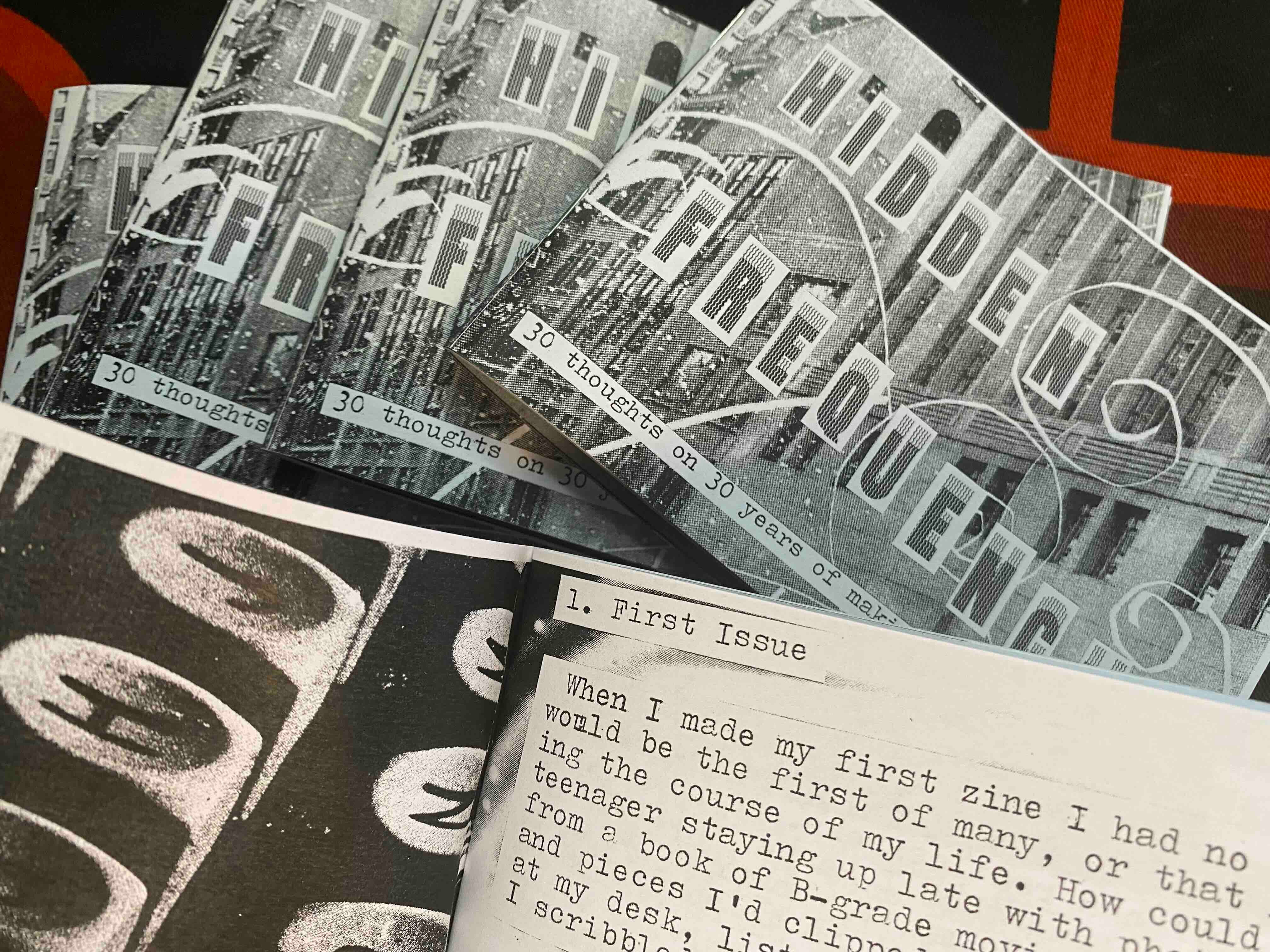
A new zine: Hidden Frequency
February brings an important anniversary for me - 30 years since I made my first zine, in February 1996. This marks the beginning of my life as a writer, and the format that has been a constant throughout my writing life. To celebrate I have made a zine in my Disposable Camera series, Hidden Frequency, with 30 thoughts on 30 years of making zines - about aspects of the zinemaking life: letters, longarm staplers, reading zines, late-night photocopying, picnics and zine cats. You can buy or trade for a copy of it at Festival of the Photocopier; it’s also on Etsy.
I’ve also been working on a project about Sydney bookshops from 1980 to the present: the first part of this you can read on my Mirror Sydney blog.
I’ll write again soon with further Calendar news,
Vanessa.
What a lovely surprise to find a mention of my Hanrahan article here, Vanessa – thank you! And I love that Milner quote. It makes me think of the work Nicola Redhouse has been doing lately on the importance of liminal spaces, pauses, and even writers' block in generating creativity. (I am wildly paraphrasing her!)
My copy of Calendar arrived in NL yesterday, incredibly quick postal service! But now I can't decide in which of the fives manners I should read it! Gaaaah, send help!